Schools
Learning experiences
The NSW Schoolhouse Museum is open for pre-booked school excursions. Students interact with artefacts and use the skills of historical inquiry to investigate the past. We offer three programs:
- Stage 1 – School Life of the Past
- Stage 2 – Continuity and Change
- Stage 2 – At School At War – paused for 2023 and 2024
Students are immersed in our authentically restored schoolrooms containing original school furniture and a varied collection of student work samples and educational resources.
Through hands-on learning, students analyse and interpret sources, recreated experiences and authentic spaces to discover the stories of education and schooling in the past.
Stage 1 – School Life in the Past
Supporting the topics Present and Past Family Life and The Past in the Present, Stage 1 students are immersed in aspects of daily school life of the past. They compare daily school life past and present, use changing technologies and analyse and interpret remains of the past. Read about a typical visit.
Inquiry questions
- How has school and everyday life changed and remained the same over time?
- How do we know what school was like in the past for children and teachers?
- What aspects of past schooling can be seen today and what do they tell us?
- How have changes in technology shaped our schooling and daily lives?
Students can:
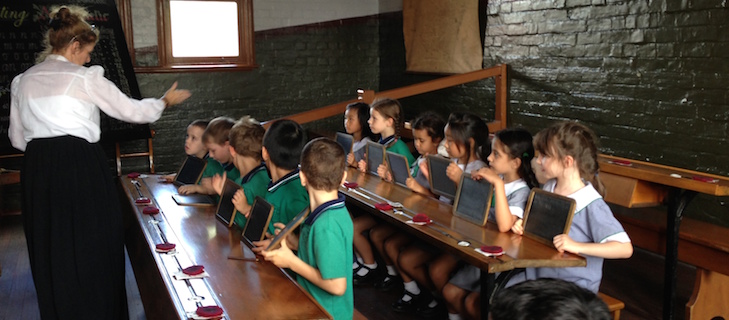
- Experience an 1880s school lesson sitting at long-toms by firelight
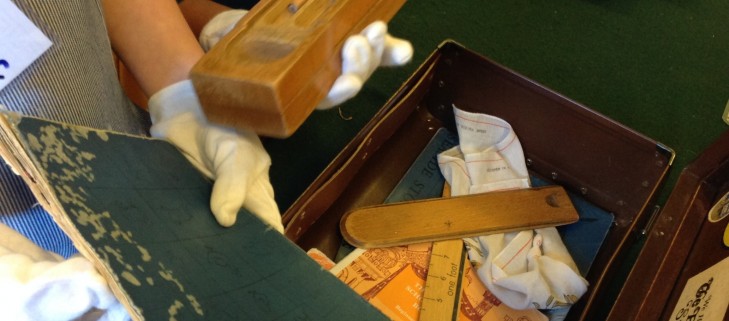
- Examine artefacts and discuss the stories they hold
- Explore exhibits of old objects and consider changes over time
- Look at early crafts and work samples treasured through generations
- Write on slates with genuine slate pencils
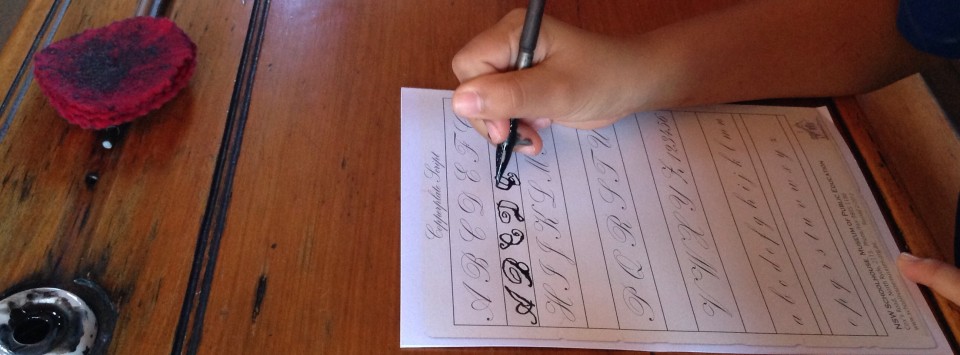
- Dip an ink pen to write Copperplate with pen and ink
- Study early photographs of school children and discover life in the past
- Use early technologies such as rubber stamps and jelly pads
- Dress in pinafores and sailors’ collars if they wish to
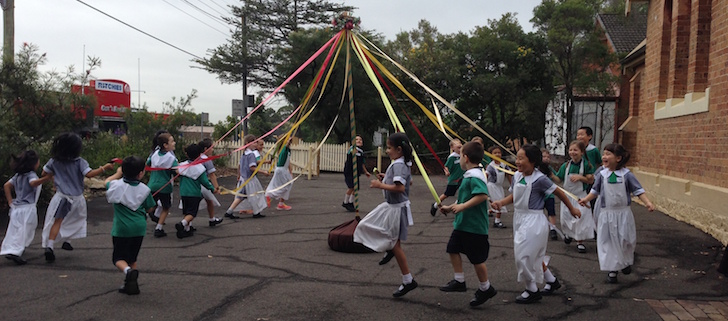
- Dance around a maypole
- Practise precision exercises using wands or dumb bells
- Play with early toys such as knuckles, marbles and spinning tops
- Eat toast cooked over the fire in winter months
- Enjoy early playground games such as ‘fly’, skipping and bowling hoops
- Compare life of the past to that of today.
Stage 2 – Continuity and Change
Supporting the topic Community and Remembrance, Stage 2 students analyse primary sources and immersive experiences to investigate the continuities and changes in education from the 1880s to the present. Students use changing technologies, compare teaching and learning methods and analyse and interpret sources such as artefacts, photographs and recreated classrooms. Read about a typical visit.
Inquiry questions
- How and why has primary education in New South Wales changed?
- What aspects of education in New South Wales have remained the same?
Students can:
- Experience recreated 1880s school lessons and technologies
- Examine early student workbooks and crafts treasured through generations
- Analyse artefacts and photographs and infer the evidence they hold
- Explore past educational objects and consider changes and continuities
- Write on slates with genuine slate pencils
- Dip an ink pen to label a map and write Copperplate with pen and ink
- Create twisted threads, weaving or knitting as past school crafts
- Assemble hand-crafted wooden toys as a past manual skill
- Construct a Cuisenaire rod mat to complete number sentences
- Use a jelly pad as an early printing technology
- Skip around a maypole
- Practise precision exercises using wands
- Play mid-20th century schoolyard games such as skipping and ‘fly’
- Dress in lacy collars and sailors’ collars if they wish to
- Toast bread over the fire in the winter months
- Compare education of the past to that of today.
Stage 2 – At School At War – paused for 2023 and 2024
We have paused this program for 2023 due to the current world crises. Go to the supporting learning resource – NSW School Children and the Anzacs.
At School At War has a hands-on focus in a First World War context and supports the topic Community and Remembrance. Students use props and sources as wartime schoolchildren to contribute to the war effort on the home front. They build understandings of the origins and significance of Anzac Day and the impacts of war on the community. Read about a typical visit. More details about At School At War.
Inquiry questions
- What is the nature of the contribution made by NSW school children to the First World War?
- What is the significance of ANZAC Day and how and why do people remember it?
Students can:
- Recite an oath and sing patriotic songs in a re-enacted 1915-1918 school assembly
- Dress in costumes representing countries of the Empire and recreate a 1915 photo of a school Empire Day tableau
- Draw a map using pen and ink showing the location of Gallipoli
- Write a postcard to a First World War teacher soldier serving at the front
- Learn drill commands and simple semaphore flag signals as prescribed by the 1916 Junior Cadet Training Text Book
- Create a 3D model of a military camp as pictured in the August 1915 Public Instruction Gazette
- Examine photographs and other sources relating to NSW school children’s First World War contributions
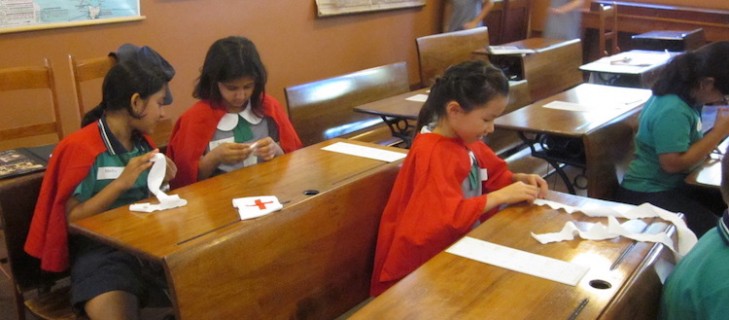
- Roll and fold bandages as Junior red Cross members
- Weigh vegetables to calculate sales to contribute to a war fund
- Spin fleece using a drop spindle to make yarn for knitting into socks
- Copy a verse to a soldier at the front from a 1917 School Magazine.